Junk Removal for Warehouses Near Me: Bulk Commercial Hauling in California

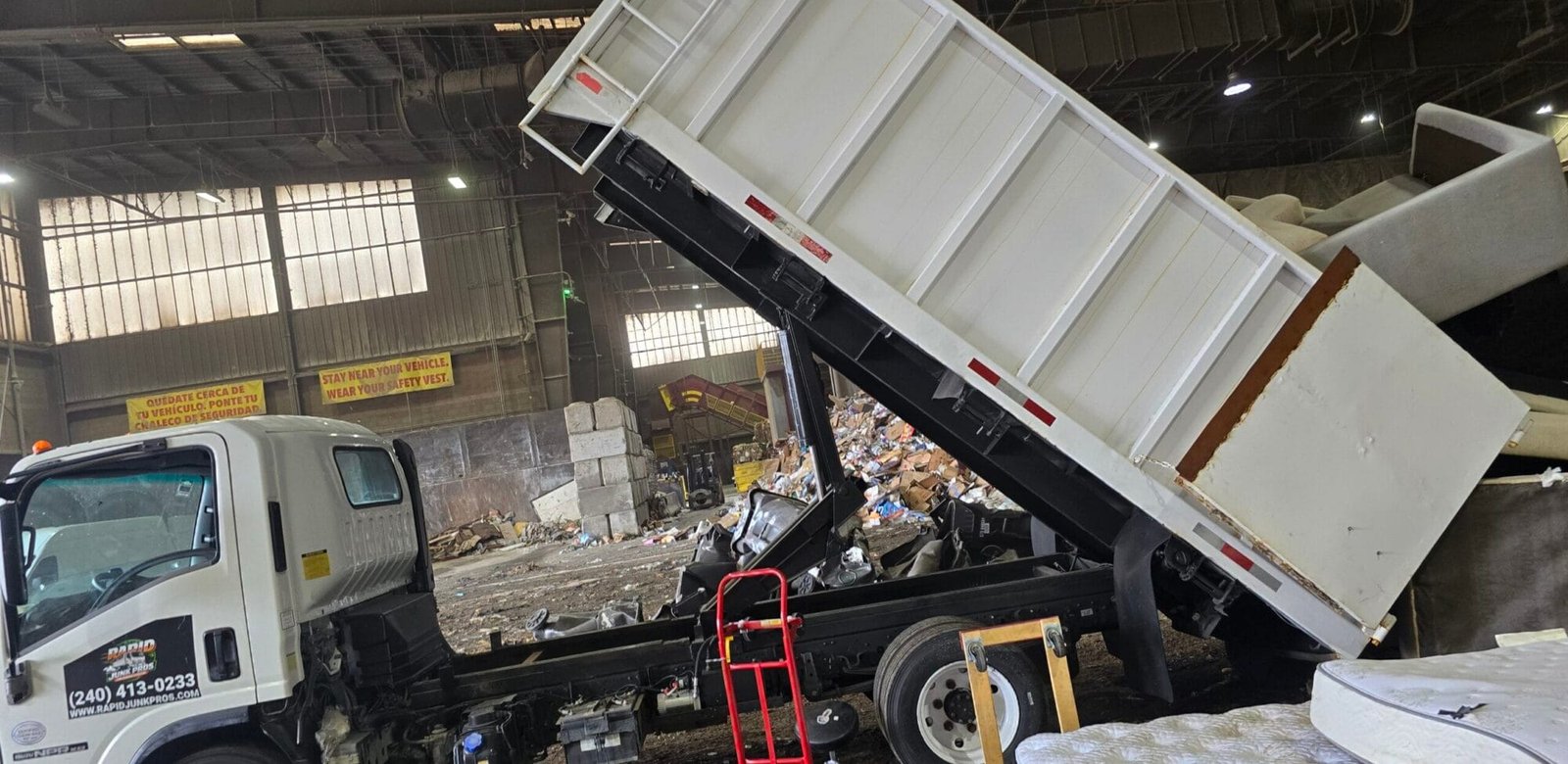
A warehouse doesn’t accumulate junk the way an office does. It accumulates it in pallet-sized chunks. Damaged inventory that can’t be sold but hasn’t been written off yet, broken racking pulled during a reconfiguration, packaging material stacked to the ceiling because nobody scheduled a hauler, a forklift battery that died two seasons ago and just got rolled into a corner. Junk removal for warehouses near me is what facilities managers and operations leads search when the square footage they’re paying for is being eaten alive by stuff nobody’s tracking anymore, and Rapid Junk Pros clears this kind of bulk commercial debris out of distribution centers and storage facilities across California.
Table of Contents
Why warehouse space feels smaller every year
Warehouse space costs money whether it’s being used for product or for junk, and that’s the part that gets missed until someone actually walks the floor and adds it up. A rack bay full of damaged goods that’s been “waiting on a decision” for eight months is a rack bay that could be holding sellable inventory. Junk removal for warehouses near me matters because reclaiming that space isn’t a nice-to-have, it’s the difference between renting more square footage you don’t need and using what you already have properly.
What we clear out of warehouses and distribution centers
- Damaged, expired, or unsellable inventory
- Broken pallets and pallet racking
- Cardboard, shrink wrap, and packaging overflow
- Old forklift batteries and pallet jacks
- Retired office furniture from the warehouse’s admin area
- Scrap metal, wood, and general construction debris from buildouts
Bulk hauling, not piecemeal pickup
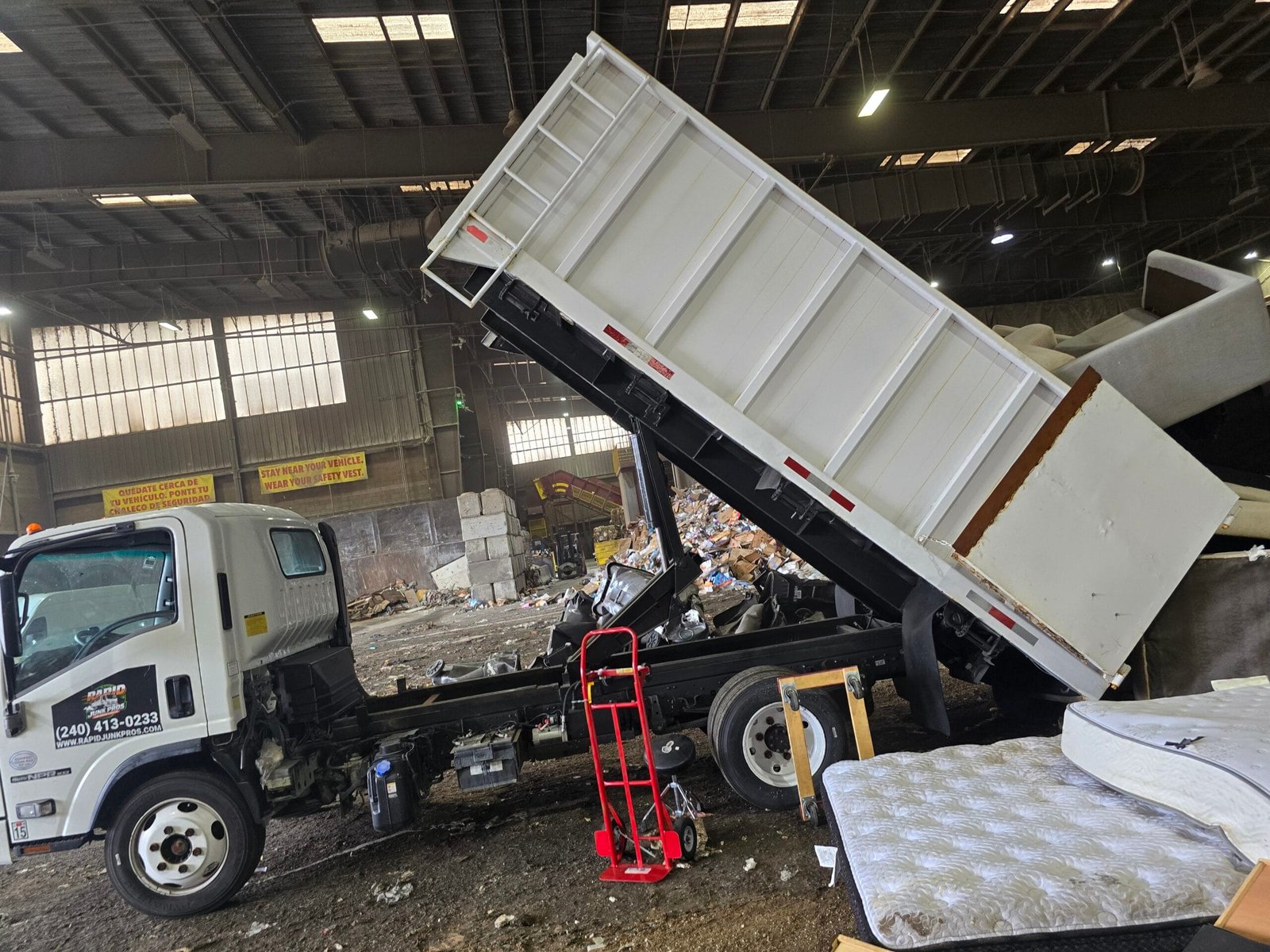
A warehouse cleanout isn’t a truckload here and a truckload there, most of the time it’s a full-day operation with multiple loads clearing out an entire bay or a full section of dead stock in one coordinated push. We bring the crew size and truck capacity to match, rather than sending a two-person team to chip away at a job that needs six people and three trips. Junk removal for warehouses near me tends to mean volume from the first phone call, and we scope it that way from the start instead of underestimating and having to reschedule a second visit.
Working around dock schedules and forklift traffic
A warehouse floor is a working environment with its own safety rules, forklift lanes, and dock scheduling, and we don’t treat a cleanout crew as an excuse to ignore any of it. We coordinate pickup times around your loading dock schedule so we’re not blocking a bay during a delivery window, and our crew stays out of active forklift paths the same way any visitor to the floor should. If your facility requires a safety orientation or a specific check-in process before crews can access the floor, tell us ahead of time and we’ll follow it.
Racking removal and reconfigurations
Reconfiguring a warehouse layout, whether that’s swapping to a different racking system or consolidating space after downsizing, leaves behind bent uprights, mismatched beams, and decking that isn’t worth reinstalling. This stuff is heavy, has sharp edges, and doesn’t break down small, which makes it a genuinely different job than furniture or boxes. We haul old racking as part of a standard warehouse cleanout, and our commercial cleanout service covers the admin office side of the same facility if that’s part of the reconfiguration too.
Damaged and dead inventory
Product that got crushed in transit, water-damaged near a leaking roof section, or simply aged out past its sell window is dead weight sitting on a balance sheet and on the warehouse floor at the same time. We haul this kind of inventory in bulk, and if your write-off process requires documentation or photos before disposal, we’re happy to work around that requirement and hold off on loading anything until you’ve got what you need for your records.
Safety and OSHA-relevant clearance
Clutter blocking a fire exit, a sprinkler head, or an aisle marked as an emergency path isn’t just messy, it’s the kind of thing that shows up on a citation during an inspection. The OSHA warehousing safety guidance covers exactly what inspectors look for around clear aisles, stable storage, and unobstructed exits, and a lot of our warehouse calls come from facilities managers who read through that checklist and realized how much of it their current storage situation was violating. Clearing the debris and reorganizing what’s left is one of the more direct ways to get back into compliance before an inspection rather than after a citation.
How fast this gets done
Smaller warehouse pickups, a few pallets of damaged goods, a section of broken racking, can often be scheduled within a day or two. Larger full-facility cleanouts usually need a site walk first so we can quote labor and truck count accurately, and we can typically get that scheduled within the week. Junk removal for warehouses near me is rarely a same-day impulse call the way a residential job might be, and we plan for that by giving you a real timeline upfront rather than a vague “we’ll fit you in.”
Pricing for volume-heavy commercial jobs
Warehouse jobs get quoted differently than a residential pickup because the volume and labor involved are on a different scale entirely. We walk the space, look at what’s involved in moving it (forklift-accessible pallets versus hand-carried debris makes a real difference), and give you a number based on truck loads and crew hours rather than a flat per-item rate that doesn’t make sense at this scale. Every commercial job comes with an invoice for your records, and we can set up recurring billing for facilities that use us on a standing schedule.
Recurring service for ongoing operations
A lot of warehouses generate this kind of debris continuously rather than as a one-time event, packaging waste from daily receiving, a steady trickle of damaged returns, seasonal inventory that needs clearing after every peak. If that’s your operation, a standing pickup schedule, weekly, biweekly, or monthly, beats calling fresh every time the dead stock area fills back up again. We run recurring routes for several warehouse and distribution clients across LA County already, and setting one up is usually a single conversation.
Serving warehouses across California
We handle junk removal for warehouses near me across Los Angeles, Glendale, Pasadena, Burbank, Long Beach, Torrance, Santa Monica, and Culver City, with crews and trucks sized for genuinely large commercial jobs rather than just residential-scale pickups. If your facility is outside that footprint, call anyway. We cover a wide stretch of California and can usually tell you within a few minutes whether it’s workable.
Frequently asked questions from warehouse managers
Do you bring enough crew for a full-facility cleanout?
Yes, we scale crew size and truck count to the job after a site walk, rather than sending a small team to a job that needs more hands.
Can you work around our dock schedule and forklift traffic?
Yes, we coordinate pickup windows around your operations and follow whatever safety orientation or check-in process your facility requires.
Can you set up a recurring pickup schedule?
Yes, several warehouse clients run on a standing weekly or monthly schedule instead of calling fresh every time.
Do you provide an invoice for our accounting department?
Yes, every commercial job comes with a clear invoice, and we can set up recurring billing for standing accounts.
Book a warehouse cleanout
If you’re searching junk removal for warehouses near me because dead inventory and debris have quietly eaten into your usable floor space, call or text us at 240-413-0233. We serve warehouses and distribution centers across California and can typically schedule a site walk within a day or two to scope out labor and truck count before quoting the job. You can also request a quote through our contact page and send photos of the area that needs to be cleared.
Seasonal inventory turnover
Warehouses tied to seasonal retail or e-commerce cycles deal with a specific kind of crunch after every peak season, leftover holiday stock, returned merchandise that isn’t worth restocking, and packaging waste from a volume spike that’s now over. This is exactly the kind of job where a standing relationship with a hauler pays off, since you’re not scrambling to find someone available the week after your busiest month of the year. We work with several operations that book us for this exact turnover window every single season.
Facility closures and relocations
Closing a warehouse or moving operations to a new facility usually comes with a lease-end deadline and a landlord expecting an empty, broom-clean space. Racking that’s not moving with you, damaged pallets, leftover packaging, and whatever accumulated in the corners over years of operation all need to go before that walkthrough. We can clear a full facility fast enough to hit a move-out deadline, and we’ve handled this exact scenario for operations relocating across the county or shutting down a location entirely.
Third-party logistics and fulfillment centers
3PL operations and fulfillment centers handling inventory for multiple clients deal with a specific version of this problem: abandoned stock from a client relationship that ended, damaged goods from a client that never came to collect them, and packaging waste multiplied across however many accounts are running through the facility at once. We’ve worked with a few 3PL operators on exactly this kind of cleanout, clearing out orphaned inventory and getting bays back to usable status for the next client without the facility having to eat the labor cost of doing it themselves.
Scrap metal and material separation
A lot of what comes out of a warehouse, bent racking, broken pallet jacks, metal shelving, has real scrap value rather than being straight landfill material. We separate scrap metal from general debris where it makes sense to, which keeps more of what we haul out of a landfill and can sometimes shave a little off the total cost of a job depending on volume. It’s not a huge factor on every job, but on a big racking teardown it adds up enough to mention.
Cold storage and specialty warehouse facilities
Cold storage facilities and specialty warehouses, think food distribution, pharmaceuticals, or anything with strict temperature and hygiene requirements, deal with an added layer of complexity when it comes to clearing out equipment and debris. Old refrigeration units, damaged shelving from a cold room, and expired product all need to be handled with an understanding that the space has different sanitation standards than a standard dry warehouse. We’ve worked with cold storage operators on exactly this kind of cleanout and adjust our approach to fit whatever protocols the facility has in place, rather than treating it like any other job.
Multi-tenant industrial parks
A lot of warehouse space in Southern California sits inside multi-tenant industrial parks, where a property manager oversees several units and each tenant is responsible for their own cleanouts within shared loading and access rules. We work within whatever access windows and dock-sharing arrangements a property manager has set up, and we’ve handled enough of these properties to know that showing up with a plan for exactly which dock door and what time slot matters more here than it would at a standalone facility.
What we can’t take
We’re upfront about limits before the crew ever shows up. Hazardous materials, chemical drums, aerosols, batteries beyond standard forklift batteries, and anything requiring a hazmat manifest need to go through a licensed hazardous waste handler rather than a standard hauling truck. If your warehouse stores any regulated materials, let us know what’s involved when you call so we can tell you clearly whether it’s something we handle or something that needs a specialized vendor first.
Auctions, liquidations, and bankruptcy cleanouts
When a warehouse operation is winding down through liquidation or a bankruptcy proceeding, whatever inventory and equipment didn’t sell at auction still has to come out of the building on a court-ordered or lease-driven timeline. This is a different kind of urgency than a routine cleanout, usually with a hard deadline and sometimes with multiple parties involved in signing off on what leaves the building. We’ve handled a handful of these situations and know to keep clear documentation and photos throughout the job, since that paperwork often matters as much to the people involved as the physical hauling does.
What actually drives the price on a warehouse job
Volume is the single biggest factor, how many truckloads it actually takes, followed closely by labor and accessibility. A pallet that a forklift can load straight onto the truck costs far less in labor than the same volume of debris that has to be hand-carried out through a narrow mezzanine stairwell. Racking teardown adds labor time since it has to be disassembled safely rather than just picked up and moved. We walk the site and give you a number based on all of this before committing to a schedule, so junk removal for warehouses near me doesn’t turn into a surprise invoice once the crew has already started.
Why warehouse operators choose Rapid Junk Pros
Commercial facilities need a hauler who shows up with the right crew size, respects the working environment, and doesn’t need everything explained twice. We treat every warehouse job with that same operational mindset: scoped properly before we start, priced honestly, and cleared completely rather than leaving the awkward, heavy pieces behind because they were harder to move. That’s what junk removal for warehouses near me should actually mean, getting your square footage back without disrupting the operation that’s paying for it.