
How to Declutter Before a Long-Distance Move (Without Losing a Month to It)

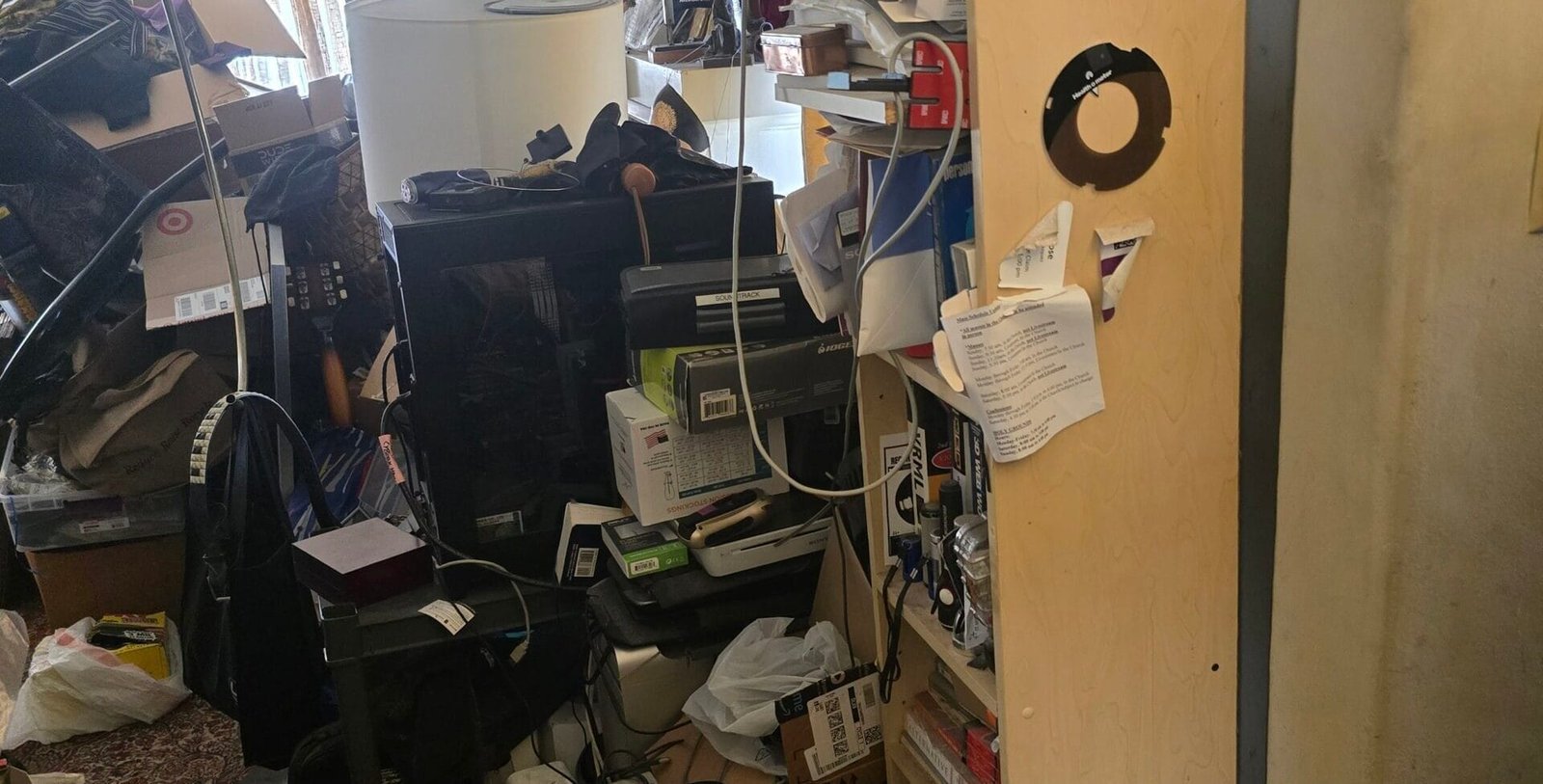
Decluttering before a local move across town is a nice-to-have. Decluttering before a long-distance move is basically a financial decision disguised as a chore. Every box, every extra chair, every “I’ll deal with it later” bin you load onto a long-haul truck gets charged for by weight or cubic footage, which means clutter you’d normally just shove in a closet becomes clutter you’re paying $0.50 to $0.90 a pound to drag across the country. If you’re trying to figure out how to declutter before a long-distance move without losing three weekends to it, this is the version of that guide written by people who load these trucks for a living.
We’re Rapid Junk Pros, based in Los Angeles, and between our junk removal jobs and the number of moving trucks we see parked outside houses every month, we’ve watched this process go well and go badly enough times to know exactly where it falls apart. It’s almost never a motivation problem. It’s a system problem — no clear method, no deadline pressure until it’s too late, and no plan for where the “no” pile actually goes.
What follows is the method we’d actually walk a friend or family member through if they called us up two months before an interstate move and asked where to start. It’s not fancy, and it doesn’t require color-coded bins or a downloadable spreadsheet. It just requires doing things in the right order, with a real deadline attached to each step instead of a vague sense that it’ll all get done eventually.
Table of Contents
Why decluttering matters more for a long-distance move than a local one
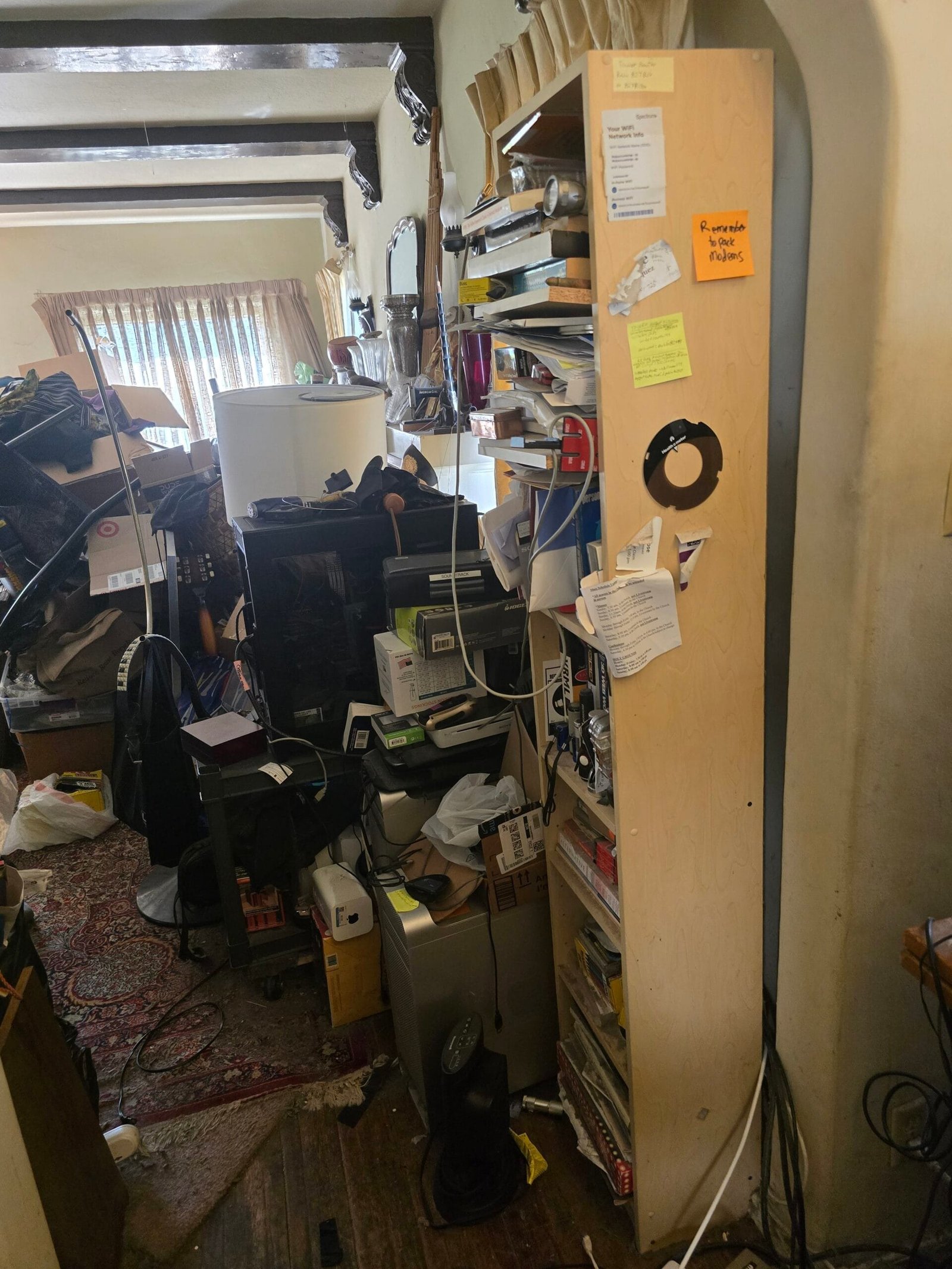
With a local move, extra stuff mostly costs you time — an extra trip in the truck, an extra hour of loading. With a long-distance move, extra stuff costs you money in a much more direct way, because interstate movers typically bill by total weight or cubic footage of your shipment. A closet you never got around to sorting can easily add 200-300 pounds of stuff you don’t actually want, and at long-haul rates that’s real money spent moving things you were probably going to throw away within a year of arriving anyway.
There’s also the unpacking side of it, which people forget about until they’re standing in a new house surrounded by boxes. Unpacking clutter in a new city, with no established donation routine yet and no idea where the local thrift store is, is a lot harder than dealing with it here, in the place you already know. Decluttering before you leave isn’t just about the moving bill. It’s about not making your future self solve the same problem in a place where you don’t yet know how anything works.
The four-pile method, adjusted for a move that actually has a deadline
The classic keep/donate/sell/trash sorting method works, but it breaks down under a moving deadline because “sell” quietly turns into “list it on Marketplace and never follow up,” and three weeks later it’s still sitting there. Here’s the version that actually survives a move date:
- Keep — goes on the truck. Be honest about whether you’ve used it in the last year, not whether you might someday.
- Sell — only for items worth at least $30-$50 that you can photograph and list within 48 hours. If it’s not listed within two days of sorting, move it to donate instead.
- Donate — anything usable that isn’t worth the effort of selling. This is where most of your pile should end up.
- Haul — broken, worn out, or genuinely not wanted by anyone. Schedule a junk removal pickup for this pile rather than letting it sit in the garage until moving week.
The key change from the standard version is giving “sell” a hard deadline. Long-distance movers don’t have the luxury of an open-ended Marketplace listing, and treating “sell” as indefinite is exactly how declutter piles turn into another thing sitting in the garage on move day.
A room-by-room order that actually gets finished
Trying to declutter “the whole house” in one sitting is how weekends disappear without much to show for it. Go in this order instead — it front-loads the rooms that hide the most unnecessary weight.
- Garage and storage areas first. This is almost always where the most pounds of unused stuff live — old tools, holiday decorations from three houses ago, boxes nobody’s opened since the last move. Clearing this first also gives you staging space for everything else.
- Closets second. Clothes you haven’t worn in a year, shoes that don’t fit anymore, and linens for a bed size you no longer own. Donate centers almost always want clean clothing and linens, which makes this an easy pile to move quickly.
- Kitchen third. Duplicate gadgets, expired pantry items, the extra set of dishes from before you moved in together. Kitchens accumulate weight fast and most of it is replaceable for very little money at your destination.
- Paperwork and home office last. Shred what you don’t need, scan what you want to keep but don’t need physically, and recycle the rest. Paper is heavy in bulk and almost never worth shipping cross-country.
If your garage or storage situation has genuinely gotten away from you — and for a lot of long-distance movers, it has — a garage and basement cleanout from Rapid Junk Pros clears it in a single visit instead of three exhausting weekends.
Don’t skip the furniture question
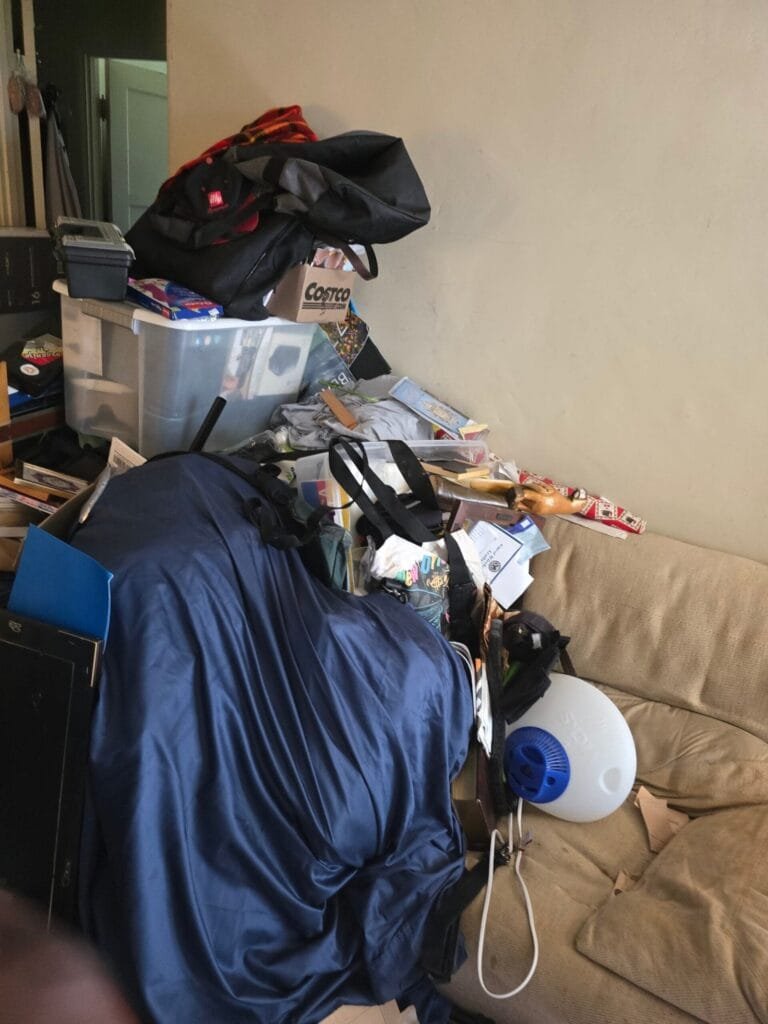
Decluttering isn’t just about small stuff — furniture is usually where the biggest weight and cost savings hide. If you haven’t already worked through which pieces make financial sense to move long-distance, it’s worth reading our companion guide on what to do with furniture before an interstate move before you finalize your declutter pile, since a lot of “keep” decisions on furniture quietly turn into “haul” decisions once you actually run the shipping math.
A realistic decluttering timeline for a long-distance move
- 6-8 weeks out: tackle the garage, storage areas, and anything currently boxed up from a previous move. This is the heaviest lift, so start here while you still have energy and weekends to spare.
- 4-5 weeks out: closets and clothing. Bag donations as you go rather than piling them in a corner “to deal with later” — that pile has a way of never getting dealt with.
- 3 weeks out: kitchen, bathroom, and living spaces. List anything you’re selling now, since it needs time to find a buyer.
- 2 weeks out: book your donation pickups and, if needed, your junk removal appointment for anything left over. Most donation centers want at least a week’s notice for larger pickups.
- Final week: paperwork, last-minute closet sweeps, and a final walkthrough of every room. Anything without a home at this point gets hauled, not stored in a box “just in case.”
The AARP moving checklist is a solid general reference if you want a broader week-by-week structure to layer this declutter timeline on top of.
What decluttering actually saves you, in real numbers
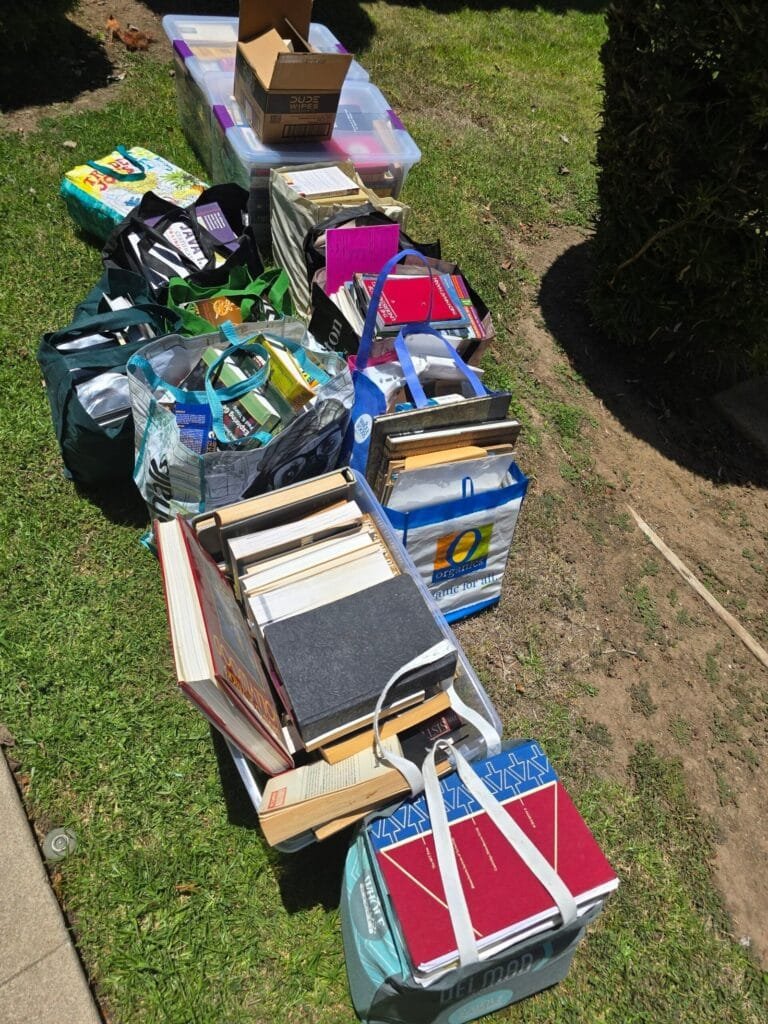
It helps to see this in numbers instead of just taking it on faith. A typical two-bedroom apartment that hasn’t been decluttered in a few years might weigh in around 6,000 to 7,000 pounds for a long-distance shipment. That same apartment, properly sorted before the movers arrive, often comes in closer to 4,500 to 5,500 pounds once the unused garage gear, outgrown clothing, duplicate kitchen items, and furniture that isn’t worth shipping are pulled out. At $0.60 a pound, that difference is somewhere in the neighborhood of $600 to $900 saved — often more than covers the cost of a junk removal pickup for everything you decided not to bring.
That math is exactly why we tell customers that decluttering before a long-distance move isn’t really an optional “nice to have” step. It’s usually the single highest-leverage thing you can do to lower the actual cost of the move, and it takes a lot less time than most people assume once there’s a clear system behind it instead of a vague plan to “get to it eventually.”
Where the “donate” pile should actually go
A lot of decluttering advice stops at “donate it” without saying where, and then people end up with bags of clothes in the trunk for three weeks because they never found time to drop them off. In Los Angeles, Habitat for Humanity ReStore takes furniture, appliances, and building materials, and several locations will schedule a pickup for larger items. Goodwill locations across the county take clothing, housewares, and smaller furniture with no appointment needed. Both are legitimate ways to keep usable items out of a landfill instead of just tossing them because the clock ran out.
For everything that isn’t donation-worthy — broken furniture, worn-out mattresses, electronics that don’t work, general household junk that piles up over years in one place — that’s exactly what our residential junk removal service is built for. One call, one crew, one afternoon, and the pile is gone instead of sitting in your garage until the day before the movers show up.
Sentimental items — the part that actually slows people down
The garage is easy compared to this. Old cards, a box of childhood toys, your kid’s school projects from three grades ago, furniture that belonged to a parent — this is the stuff that turns a Saturday afternoon into a Saturday spent sitting on the floor looking through photo albums instead of packing. It’s a normal part of decluttering before a long-distance move, and it’s worth giving it its own separate time slot rather than trying to power through it alongside the kitchen cabinets.
A few things that help: set a physical limit, like one bin per person for keepsakes, rather than an open-ended “keep everything meaningful” rule that never actually narrows anything down. Take photos of items you’re on the fence about instead of keeping the physical object — a photo of your kid’s kindergarten artwork takes up a folder on your phone instead of a box on the truck. And give yourself permission to keep things you genuinely love while letting go of things you’re keeping out of guilt. Those are two different categories, even though they feel the same in the moment.
Decluttering when it’s not just your decision to make
If you’re moving with a partner, roommates, or kids, decluttering stops being a solo project the moment you hit shared spaces and anyone else’s belongings. A few things make this go smoother instead of turning into an argument three weeks before your move: agree on a deadline together up front, rather than one person nagging the other as moving day gets closer.
Split the house by area of responsibility rather than trying to make every decision jointly — it’s slower and more contentious than it needs to be. And with kids, involve them in their own rooms in an age-appropriate way; even young kids can usually manage a “keep this many toys” limit if you frame it as a choice rather than a loss.
Shared garages and storage areas are usually where multi-person households lose the most time, because nobody wants to be the one who throws out someone else’s stuff. Setting a joint deadline for that space specifically — everyone sorts their section by a certain date, or it goes into the haul pile — tends to work better than an indefinite “we’ll get to it.”

What to do with things you want to keep but won’t need right away
Not everything falls neatly into keep-and-ship or get-rid-of-it. Seasonal decorations, off-season clothing, and furniture for a room you won’t set up right away are all real categories, and shoving them onto the moving truck isn’t always the answer, especially if your new place is smaller or you’re moving into temporary housing first.
If you’re between homes, downsizing the square footage, or just not ready to unpack everything on day one, a local storage unit can bridge that gap without forcing an all-or-nothing decision on every box. We work with plenty of customers who eventually need that storage space cleaned out too, which is exactly what our storage unit cleanout service handles once “just for now” storage turns into something that’s overstayed its welcome.
The honest caveat here: storage should be a short-term bridge, not a substitute for actually deciding what to do with something. We’ve cleaned out plenty of units where “temporary” storage quietly turned into three years of paying a monthly fee for boxes nobody opened. If you’re not sure whether something is worth storing, ask yourself if you’d pay to ship it across the country. If the answer is no, it’s probably not worth paying a monthly storage fee for it either.
Decluttering mistakes that cost people time and money before a long-distance move
- Starting too late. Decluttering under deadline pressure turns into “just pack it, I’ll deal with it there,” which defeats the entire purpose and ships weight you didn’t need to ship.
- Sorting by room instead of by category. Clothes are scattered across three closets and a dresser — sort all of one category at once so you can see duplicates and make faster decisions.
- Storing decluttered items instead of removing them. Moving a “maybe” pile into a storage unit just relocates the decision. If you haven’t needed it by moving week, that’s your answer.
- Underestimating how much a garage or storage area actually holds. This is consistently where people are most surprised by how much weight (and cost) was hiding.
- Trying to declutter and pack at the same time. These are two different tasks with two different mindsets. Finish deciding what stays before you start wrapping it in bubble wrap — otherwise you’ll end up unpacking boxes you just packed to pull items back out for donation.
- Not measuring the new place before deciding what to keep. A long-distance move often means a different size home, and furniture or storage systems built for your current layout may not make sense in the new one.
- Ignoring the garage until the last week. It’s usually the single heaviest category in the house and the one people put off longest because it feels the most overwhelming.
Most of these come down to the same root cause: treating decluttering as something to squeeze in around packing instead of giving it its own dedicated block of time on the calendar. Households that block out specific weekends for specific rooms almost always finish with less stress and a noticeably lighter (and cheaper) shipment than households trying to do it all in the final week.
Key Takeaways
- Long-distance movers charge by weight or cubic footage, so decluttering before you move directly lowers your moving bill.
- Use a four-pile method — keep, sell (with a 48-hour listing deadline), donate, haul — instead of an open-ended sorting system.
- Start with the garage and storage areas, since that’s typically where the most unnecessary weight hides.
- Rapid Junk Pros handles the “haul” pile with same-day and next-day pickup across Los Angeles, so nothing sits around until the last minute.
Frequently asked questions
How long does it take to declutter before a long-distance move?
For a typical single-family home, plan on four to six weekends spread across six to eight weeks if you’re doing it yourself. Starting with the garage and storage areas first tends to make the rest of the house go faster, since that’s usually where the bulk of the volume is hiding.
What’s the fastest way to declutter before a long-distance move if I’m short on time?
Skip the sell pile entirely and focus on donate and haul. Selling takes time you may not have close to a move date, while donation drop-offs and junk removal pickups can clear a whole house in days rather than weeks.
Should I declutter before or after getting a moving quote?
Before, if at all possible. Movers estimate based on weight or cubic footage, so a decluttered home gives you a more accurate — and usually lower — quote than one based on a house full of things you’re about to get rid of anyway.
How do I know what to keep when learning how to declutter before a long-distance move?
A simple rule: if you haven’t used it in the last twelve months, and it isn’t seasonal or sentimental, it’s a strong candidate to sell, donate, or haul rather than pay to ship.
What should I do with sentimental items I can’t decide on?
Set a firm limit, such as one bin per person, and photograph items you’re unsure about instead of keeping the physical object. This keeps sentimental decluttering from stalling out the rest of your timeline.
Can I declutter and pack in the same week?
You can, but it usually creates more work, not less. Finish sorting a room completely before you start packing it, so you’re not unpacking boxes later to pull items back out for donation or removal.
Get the “haul” pile out of your house before moving week
Once you’ve sorted your home into keep, sell, donate, and haul, don’t let that last pile sit in the garage until the movers are already there. Rapid Junk Pros offers same-day and next-day junk removal throughout Los Angeles, so the stuff you’ve decided not to bring is actually gone before your moving truck ever pulls up. Call or text 240-413-0233 for a free quote, or visit our contact page to schedule around your move date.
We’ve been clearing houses across LA since 2016, and long-distance move season is one of our busiest stretches for exactly this reason. However you choose to work through it, the core idea behind how to declutter before a long-distance move stays the same: decide fast, act on the decision immediately, and don’t let a “maybe” pile follow you into a new state.