
What to Do With Furniture Before an Interstate Move (So You’re Not Paying to Ship Junk)

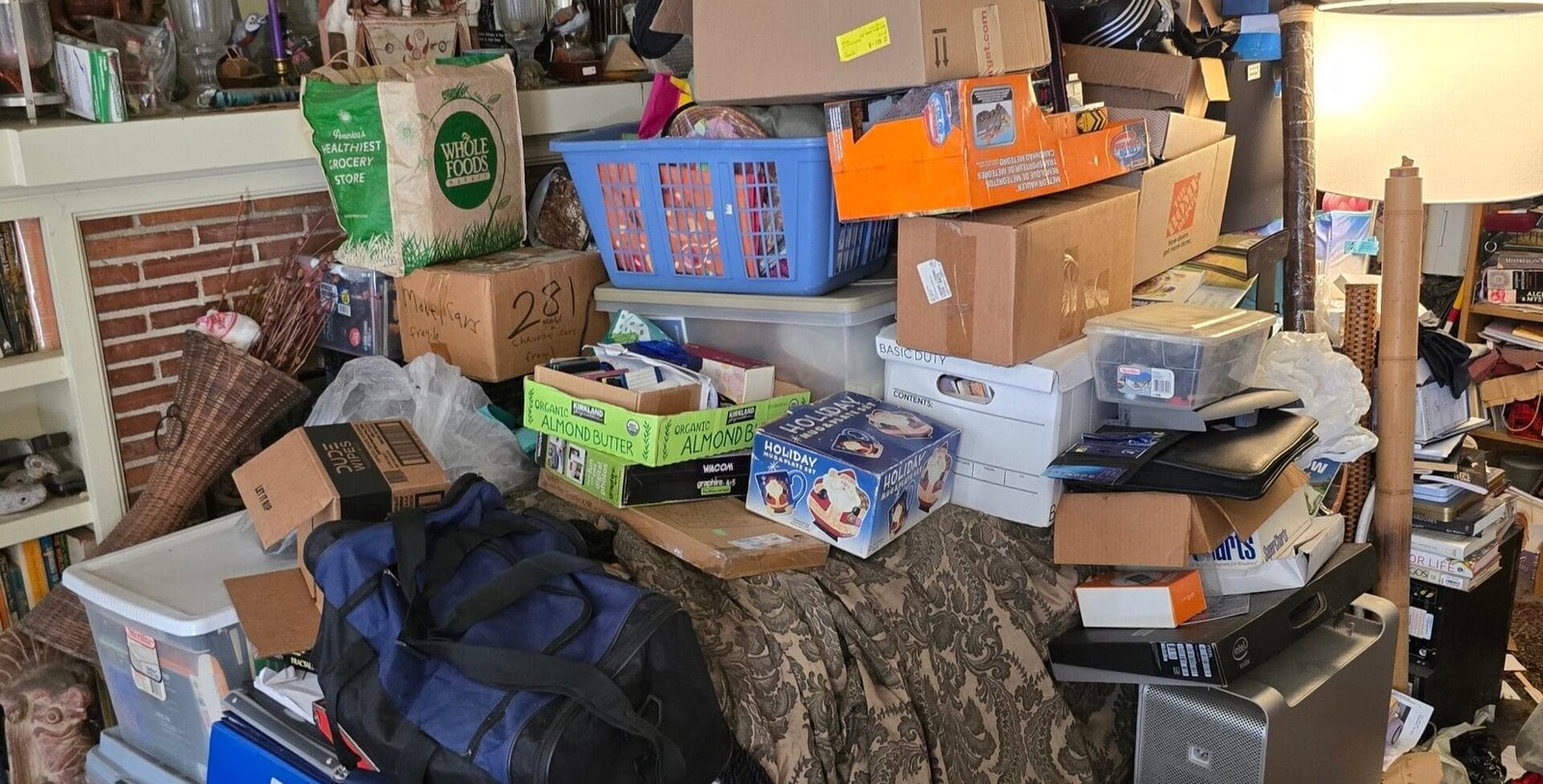
Somewhere between hiring the movers and the truck showing up, most people ask themselves the same question at 11pm while standing in front of a dresser: is this thing actually worth taking with me? If you’re staring down an interstate move right now, figuring out what to do with furniture before an interstate move is honestly the decision that saves or costs you the most money in the entire process — more than the boxes, more than the gas, more than the pizza you’ll order the crew on move day.
We’ve loaded enough trucks at Rapid Junk Pros to know the pattern by heart: people ship things that should’ve been sold on the curb, and they leave behind the one piece they actually needed. Let’s fix that before your movers show up.
This isn’t a “declutter your whole life” article. It’s a practical one. You’ve got a move date, a truck (or a broker, or a pod), and a garage full of furniture that all needs a decision attached to it. Keep reading and you’ll walk away knowing exactly what stays, what goes, and who to call for the stuff that’s neither.
We see the same version of this scramble almost every week out of Los Angeles: a family booked a long-haul mover months ago, got busy with work and school schedules, and now they’re four days out with a garage they haven’t touched since they moved in. It’s not a failure of planning so much as it’s just how moving actually goes for most people. The good news is that furniture decisions are one of the few parts of an interstate move you can knock out fast once you know the actual criteria, instead of standing in a room second-guessing yourself.
Table of Contents

The real question isn’t “what do I pack” — it’s “what’s this worth once it gets there”
Every long-distance move gets priced by weight or by cubic feet, and almost nobody actually runs the math before the truck is loaded. Here’s the version that matters: most interstate moving companies charge somewhere between $0.50 and $0.90 per pound for a cross-country haul, and brokers who price by cubic footage often land between $50 and $150 per cubic foot depending on the season and the route.
A queen bed frame with a boxspring and mattress can run 250 to 300 pounds. A three-cushion sectional is closer to 350. A basic particleboard dresser from a big-box store weighs 120 pounds and, once it’s on the truck, costs almost exactly as much to ship as a similar-sized dresser made of real wood that will outlive both of us.
That’s the part nobody tells you at the estimate appointment. The moving company doesn’t care what the furniture is worth. They care what it weighs and how much space it eats in the truck. So the first filter for what to do with furniture before an interstate move isn’t sentimental value or how much you paid for it — it’s whether shipping it costs more than replacing it. If a $200 dresser is going to cost you $180 in freight, that math doesn’t work, and it didn’t work before you even started packing.
The furniture that’s almost never worth shipping across state lines
We say this as the people who show up with a truck and haul this stuff out of houses every week in Los Angeles: some furniture just isn’t built to survive 2,000 miles in a moving truck, and it’s usually not worth the freight even if it does.
- Particleboard or MDF furniture from IKEA, Wayfair, or similar — flat-pack pieces are held together with cam locks and dowels that loosen with vibration. They rarely survive a long haul intact, and if they do, they’re not worth what you paid to move them.
- Old mattresses and box springs — many interstate carriers won’t take a mattress that’s more than a few years old without a mattress bag, and some states have bed bug disclosure rules that make this a bigger headache than it needs to be. If yours is past the seven-year mark, replace it at your destination.
- Particleboard entertainment centers and TV stands built for a tube TV nobody owns anymore.
- Patio furniture that’s already rusting or has sun-faded cushions — resin and wicker sets rarely survive a cross-country trip without cracking.
- Free or hand-me-down furniture you kept out of guilt rather than use. If you haven’t sat on it, opened it, or needed it in a year, it’s not earning its spot on the truck.
- Anything with active water damage, mold, or a smell you’ve been ignoring. Movers can refuse these items on the spot, and you don’t want that conversation happening in your driveway on move day.
None of that means throw it in a dumpster and hope for the best. It means these are the pieces to sell, donate, or have hauled before the movers ever walk through your door — which we’ll get to in a minute.
The furniture that’s actually worth the freight
On the other side of this, some furniture is genuinely worth paying to move, and it’s usually the stuff that’s hard or expensive to replace at your destination.
- Solid wood dressers, dining tables, and bed frames — real wood pieces hold their value and their structure over a long haul in a way particleboard never will.
- Family heirlooms and antiques, even ones that aren’t in perfect shape. These usually can’t be repurchased, so the freight cost is almost beside the point.
- A newer, high-quality mattress that’s still under warranty and less than five years old.
- Custom or built-to-fit pieces, especially anything made for a specific room layout you’re recreating.
- Large upholstered furniture in genuinely good condition — a well-made sofa or sectional that would cost $1,500 or more to replace new.
A useful gut check: if you’d be upset to see it left on the curb, it probably belongs on the truck. If your honest reaction is “eh, I guess,” that’s your answer too.
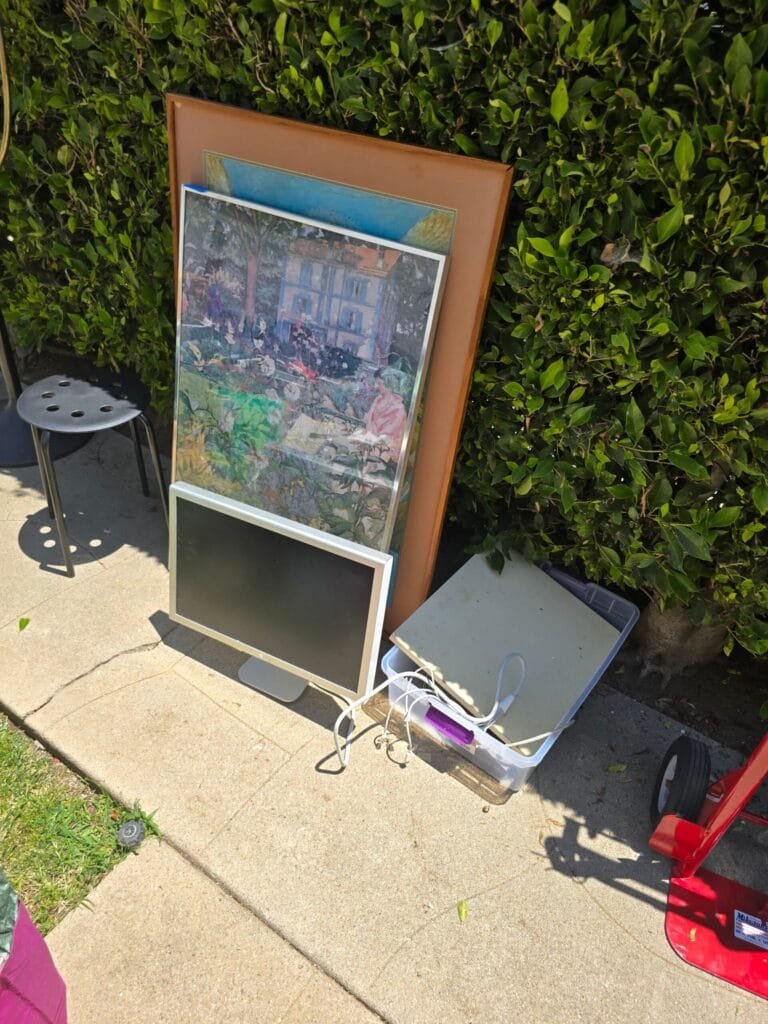
Sell it, donate it, or haul it — how to decide in under five minutes per item
Once you’ve sorted your furniture into “ship it” and “not shipping this,” the leftover pile still needs somewhere to go, and this is where most interstate moves lose a weekend they didn’t have to lose. Here’s the quick version we walk our own customers through in Los Angeles before a move:
Sell it if it’s in good shape, mid-to-higher value, and you have at least two to three weeks before your move date. Facebook Marketplace and OfferUp move furniture fast in most LA neighborhoods, especially dining sets, dressers, and anything mid-century or vintage. Price it to move, not to hold — furniture that’s still sitting a week before your move is furniture you’ll be paying someone to take away anyway.
Donate it if it’s usable but not worth the listing effort, or your timeline’s too tight to manage buyers. Habitat for Humanity ReStore and Goodwill of Southern California both accept gently used furniture, and several locations offer pickup for larger pieces if you call ahead. This is the option that actually does some good with furniture you don’t need anymore instead of it landing in a landfill.
Haul it if it’s damaged, outdated, too heavy to move alone, or you’re down to the final week before your move and just need it gone. This is where we come in. Rapid Junk Pros handles furniture removal across Los Angeles on a same-day or next-day basis, which matters a lot when your moving truck is booked for Thursday and you’re realizing on Tuesday that the old sectional isn’t coming with you. We also handle full garage and basement cleanouts if the furniture question is really a “there’s ten years of stuff in here” question.
A room-by-room pass that actually gets finished
Trying to decide on furniture for the whole house at once is how people end up staring at their own living room for forty-five minutes doing nothing. Go room by room instead, and set a timer if you have to.
Living room: the sofa is almost always the biggest call. If it’s under five years old and in good shape, it’s usually worth shipping. Coffee tables and TV stands from big-box stores rarely are — they weigh a lot relative to what they’d cost to replace at your new place.
Bedrooms: mattresses over seven years old should be replaced at your destination rather than shipped — the freight cost plus the age of the mattress rarely justifies it. Solid wood bed frames and dressers are usually keepers. Nightstands from flat-pack furniture lines are the first thing to sell or donate.
Kitchen and dining: a solid wood dining table is worth the freight almost every time. Mismatched chairs, a wobbly bar cart, or a kitchen island you bought to fill space are all better sold locally than moved 1,500 miles.
Garage, patio, and storage areas: this is where interstate moves quietly blow their budget. Old patio sets, a workbench you haven’t used since 2022, kids’ outdoor toys that have been rained on all summer — none of this earns its weight on a moving truck. If your garage has become the place furniture goes to be forgotten, a residential junk removal visit before your move date clears it in an afternoon instead of a weekend.
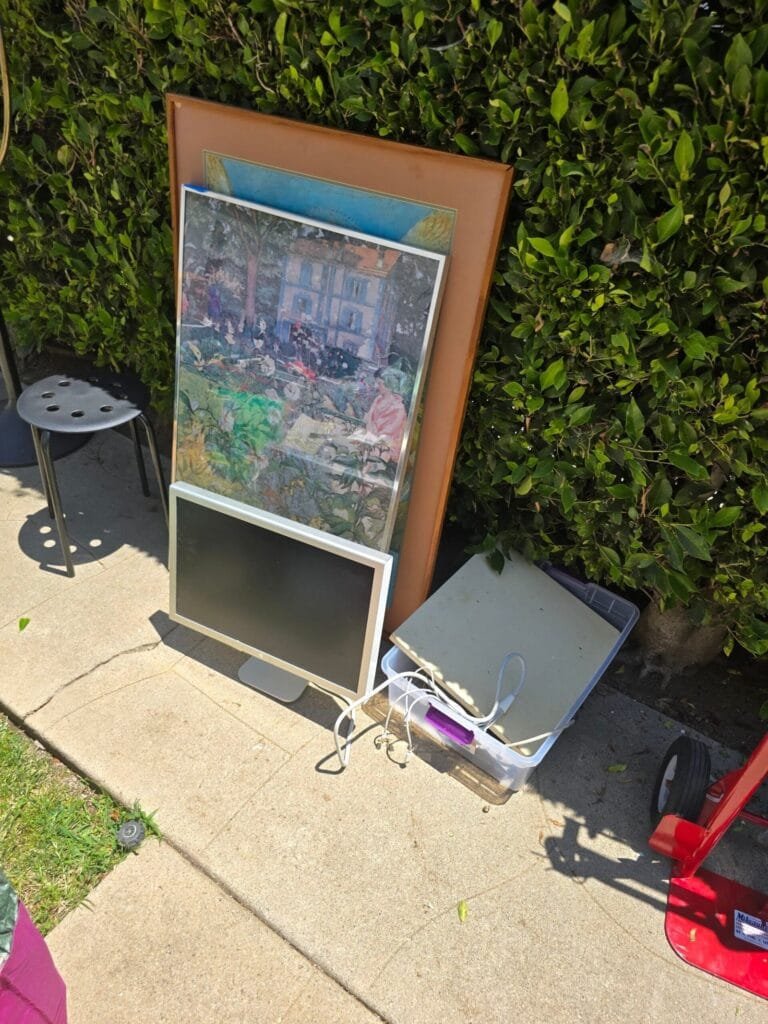
Measure before you decide — the mistake that ruins move-in day
Here’s something that gets skipped constantly: nobody checks whether the furniture even fits the new place before deciding to ship it. If you’re moving from a house into an apartment, or from an older home with wide hallways into new construction, door widths and ceiling heights can be genuinely different, and a sectional that fit through your current front door might not clear the new one.
Get the floor plan or at least rough room dimensions from your new landlord or the listing photos, and check three things before you commit furniture to the truck: doorway width, stairwell turns, and whether there’s an elevator if you’re headed into a multi-story building. A king bed frame that needs to go up a narrow stairwell with a tight turn is a real problem, and it’s a much cheaper problem to solve now than after it’s already on a truck 1,500 miles from home.
This also applies to scale, not just clearance. A sectional that looks reasonable in a 400-square-foot living room can swallow a smaller apartment whole. If you’re downsizing the square footage along with the state, it’s worth sketching a rough layout of your new space before you decide what furniture to keep — it’ll save you from paying to ship something that ends up blocking your own front door.
How to protect the furniture that is making the trip
Once you’ve settled on what’s actually going, the pieces that are shipping deserve a little effort so they arrive in the same shape they left in. A few habits that make a real difference on a long haul:
- Disassemble what you can — bed frames, table legs, and modular sectionals travel far better in pieces than fully assembled. Bag the hardware and tape it to the underside of the piece it belongs to, not in a box you’ll lose track of.
- Wrap corners and legs separately from flat surfaces. Moving blankets over cardboard corners prevent the dings that happen when a dresser shifts against a wall panel during transit.
- Empty drawers and cabinets. Movers will usually ask for this anyway, and a dresser packed with clothes is both heavier to move and more likely to have drawer fronts pop under the weight during loading.
- Photograph anything with existing damage before the truck is loaded. If a claim ever comes up, timestamped photos are the difference between a quick resolution and a drawn-out argument over what happened when.
None of this applies to the furniture you’ve already decided isn’t making the trip, which is exactly why sorting that out first — before wrapping a single blanket — saves so much time on move day.
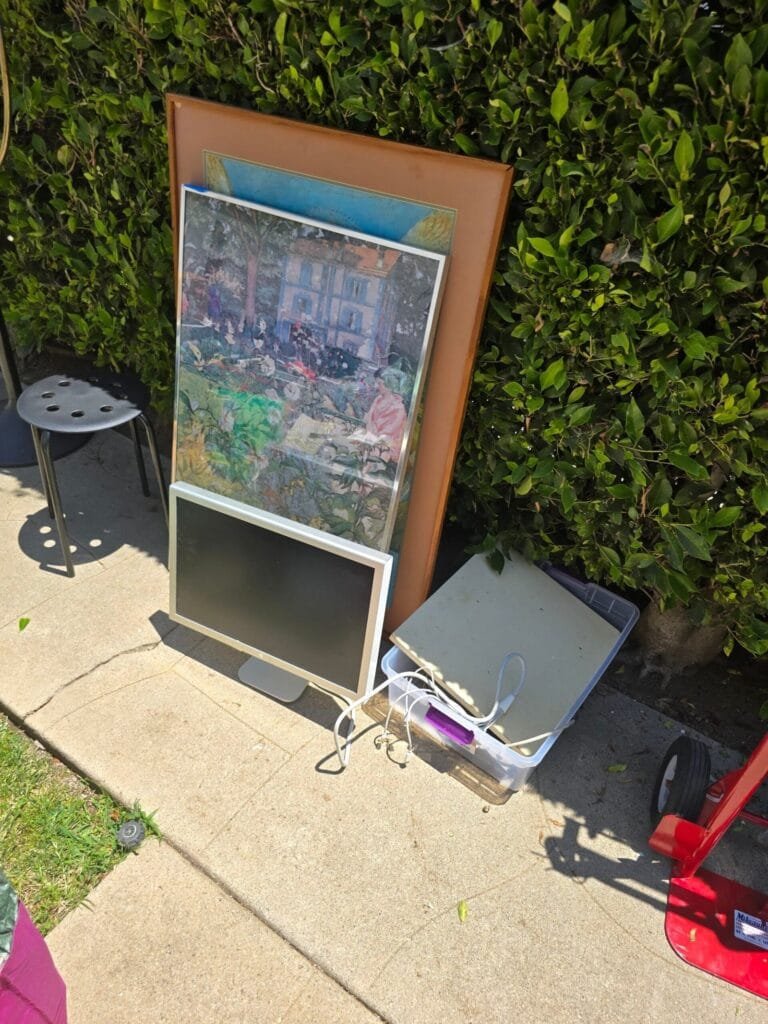
What to do with the furniture no one wants — not even the thrift store
Every move turns up at least one piece that’s too worn for Goodwill, too heavy to carry to the curb alone, and too much of a hassle to list for free and then wait around for a stranger who never shows up. This is normal, and it’s exactly the gap junk removal exists to fill. We show up with a crew, load it straight onto the truck, and take responsibility for getting it recycled or disposed of properly — no dragging a dresser down two flights of stairs by yourself the night before your movers arrive. Same-day pickup is usually available if you’re down to the wire, which we get calls about constantly the week of a move.
Timeline: when to make these calls before your move date
Deciding what to do with furniture before an interstate move works a lot better with a rough schedule attached to it, so here’s the one we recommend to customers booking a moving truck out of Los Angeles.
- 4-6 weeks out: walk the house and make your keep/sell/donate/haul list. Start listing higher-value pieces for sale now, since good furniture can take two to three weeks to find the right buyer.
- 2-3 weeks out: schedule your donation pickups. Most Habitat ReStore and Goodwill locations need at least a week’s notice for larger furniture pickups, longer around the first and last week of the month.
- 1 week out: book junk removal for anything left that isn’t shipping, selling, or being donated. This is also the point to get a firm quote from your mover with a final, accurate inventory — fewer surprises on the bill this way.
- 1-2 days out: final walkthrough. Anything still sitting in a corner with no plan attached gets one last decision: it’s either going in the truck or it’s getting hauled, today.
One more thing worth building into that timeline: confirm your mover’s actual pickup window a few days before, not the morning of. Interstate carriers often work with a delivery spread of several days rather than a fixed date, and knowing that window helps you decide how tight your furniture decisions really need to be. If your pickup window is still two weeks out, you have time to list a piece for sale. If it’s four days out, don’t waste time on Marketplace messages that might not go anywhere — donate or haul it and move on to the next item on your list.
The Federal Motor Carrier Safety Administration’s Protect Your Move program is also worth a look before you sign anything with an interstate carrier — it covers your rights around estimates, weight disputes, and what to do if a mover gives you a number that changes on move day.
Key Takeaways
- Interstate movers charge by weight or cubic footage, so cheap, heavy furniture almost always costs more to ship than it’s worth.
- Solid wood, heirlooms, and newer mattresses are usually worth the freight. Particleboard furniture, old mattresses, and worn patio sets almost never are.
- Sell furniture with real resale value at least two to three weeks before your move; donate what’s usable but not worth listing; haul away what’s left.
- Rapid Junk Pros offers same-day and next-day furniture removal across Los Angeles for the pieces that aren’t coming with you.
Frequently asked questions
Should I sell my furniture before an interstate move or just ship it?
Run the math first. If shipping costs more than half of what the piece is worth or what it would cost to replace, sell it and buy new (or new-to-you) furniture once you’ve arrived. Higher-value, solid wood, and hard-to-replace pieces are usually the exception.
Do movers charge extra for heavy furniture?
Interstate movers typically price the whole shipment by total weight or cubic footage rather than charging per item, but heavy furniture still adds directly to that total. A few heavy, low-value pieces can push your bill up noticeably without adding much real value to your new home.
What should I do with furniture I can’t sell or donate in time?
Book a junk removal pickup. Rapid Junk Pros offers same-day and next-day furniture removal throughout Los Angeles, so you’re not left dragging a dresser to the curb the night before your movers arrive.
How far in advance should I start deciding what to do with furniture before an interstate move?
Start four to six weeks out if you plan to sell anything, since good furniture can take a couple of weeks to find a buyer. If you’re inside two weeks, focus on donation and junk removal instead of trying to sell — you likely won’t have time to wait on buyers.
Is it cheaper to buy new furniture than move it across the country?
Often, yes — especially for mid-range, big-box furniture. Once you add up freight cost per pound, the risk of damage in transit, and the age of the piece, replacing a $300-$500 item at your destination frequently comes out cheaper than shipping it. High-value or hard-to-replace furniture is the exception, not the rule.
Will my new place even fit the furniture I’m bringing?
Check before you load the truck, not after. Get rough dimensions of your new home and compare them against doorway widths, stairwells, and your largest pieces. This is one of the most common and most avoidable causes of move-in day headaches.
Get your furniture handled before the movers arrive
If you’re staring down a move date and a garage full of furniture that isn’t coming with you, Rapid Junk Pros can clear it in a single visit — no listing photos, no waiting on strangers from Marketplace, no hauling a dresser down the stairs yourself. We’ve been doing this in Los Angeles since 2016, and interstate move week is one of the busiest stretches we work every year.
Call or text 240-413-0233 for a free quote, or head over to our contact page to get same-day or next-day pickup scheduled around your move. If you’re also relocating the rest of the house, take a look at our full moving and relocation services page for everything we handle before, during, and after moving day.